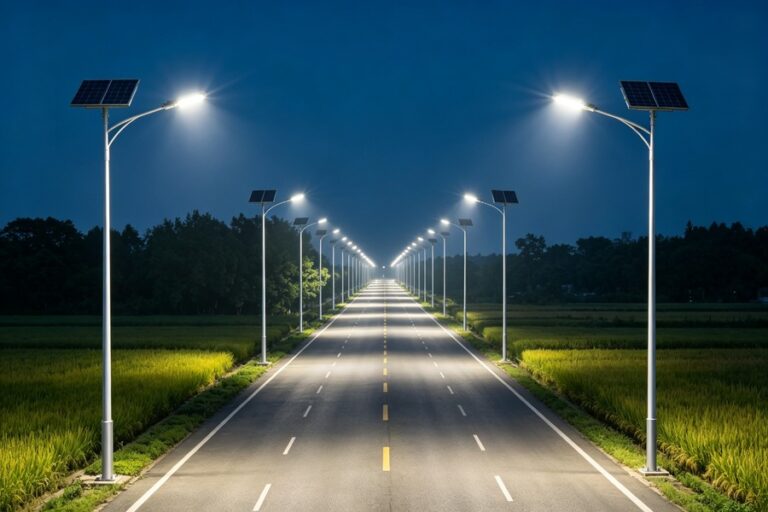
Solar street light with removable solar panel
Date: October 8, 2026
A solar street light with a removable solar panel solves many of the most persistent practical pain points that appear in outdoor lighting system deployment, maintenance and long term operation. Unlike fixed integrated panel designs, this configuration allows operators to detach the photovoltaic unit from the main light assembly quickly and safely, without needing heavy lifting equipment or high-rise access platforms for many routine tasks. This simple but meaningful design change creates tangible improvements across every stage of the system’s lifecycle, from initial site installation to years of ongoing field maintenance.
Simplified field deployment and site adaptability
During initial installation, the removable solar panel can be assembled, pre-wired and tested on the ground before being lifted and secured to its final mounting position. This eliminates the need for technicians to perform complex electrical wiring and connection work while standing on elevated platforms, significantly reducing work at height risks and speeding up the entire installation process. Teams can also adjust the exact tilt angle and orientation of the solar panel independently from the light fixture, to match local latitude and seasonal sun path patterns perfectly.
If existing site conditions such as nearby tree growth, new building construction or terrain features create unexpected shading after installation, operators can reposition or relocate the solar panel without modifying the entire street light structure. This flexibility makes the system far easier to adapt to changing site conditions, compared to fixed panel designs that lock the photovoltaic unit into one permanent position at the time of installation. Teams can also temporarily detach and move panels to different locations to test and optimize performance before finalizing a permanent layout.
Low-risk routine maintenance and component replacement
When routine cleaning of the solar panel surface is needed, maintenance staff can detach the unit, bring it down to ground level and perform a full, thorough cleaning without needing to work at height. This removes the risk of dropping cleaning tools or creating unsafe conditions on public roads, and allows technicians to safely remove stubborn layers of dust, bird droppings, salt residue or industrial pollution that build up on the panel surface over months of outdoor exposure. A properly cleaned panel recovers full solar energy harvesting efficiency, preventing gradual performance loss that would otherwise reduce lighting runtime during cloudy periods.
If the solar panel suffers accidental damage from extreme weather, flying debris or vandalism, it can be replaced directly without needing to remove or replace the entire street light assembly. This cuts down repair time significantly, and eliminates the need for large specialized equipment to handle heavy integrated units. Maintenance teams can also swap in a fully charged spare panel during extended periods of heavy snow cover, to keep the system collecting solar energy even when the original unit is completely covered.
Performance optimization and long term lifecycle management
The removable panel design allows operators to test and upgrade photovoltaic technology independently, without replacing the entire street light fixture. As new higher efficiency photovoltaic technologies become available in the future, existing systems can be upgraded by swapping out only the panel unit, instead of discarding the perfectly functional light assembly, battery and control system. This extends the overall usable lifecycle of the complete system and reduces unnecessary electronic waste.
Teams can also detach and store solar panels in a secure location during extreme weather events such as major hurricanes, severe hailstorms or extended periods of heavy vandalism risk. This protects the most exposed and often most vulnerable high-value component from permanent damage, avoiding costly full system replacement after predictable severe weather events. Over years of operation, this modular, separable structure makes it far easier to track individual component performance, identify which panels are showing signs of aging or efficiency loss, and schedule targeted replacements before overall system performance drops below acceptable levels.
Wiring reliability and connection system protection
The detachable design uses a purpose-built, weather-sealed connection interface between the removable solar panel and the main light system. This standardized connection point allows the panel to be disconnected and reconnected repeatedly without damaging internal wiring, unlike fixed installations that require cutting and re-soldering cables during any panel removal work. When properly sealed against moisture, dust and temperature cycling, this interface maintains stable electrical conductivity over thousands of connection cycles and years of outdoor exposure.
The separate connection point also makes it much easier to perform isolated system troubleshooting. Technicians can quickly detach the solar panel to test its open circuit voltage and charging performance independently, without needing to access or disassemble the main control unit located inside the street light housing. This drastically reduces diagnostic time when troubleshooting charging faults, and helps maintenance teams separate solar panel performance issues from problems related to batteries, controllers or LED light units.
Recommended articles

Solar street light with solar panel rotation bracket
October 12, 2026
Solar street light with battery temperature monitoring
October 12, 2026