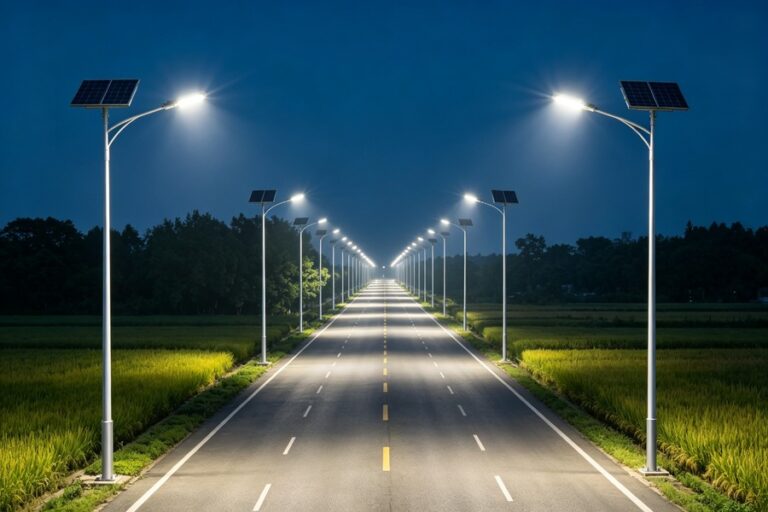
Solar street light with slow charging mode
Date: October 9, 2026
The slow charging operating mode in solar street light systems is a purpose-built design choice that prioritizes long-term system reliability, extended energy storage lifespan, and stable performance in remote, low-maintenance deployment locations. Unlike aggressive fast charging schemes that push high current into the battery during peak sunlight hours, this approach delivers a gentle, consistent energy flow that minimizes internal stress on every system component. This makes it an ideal choice for locations where access for regular maintenance visits is difficult, and consistent multi-year performance is a top operational priority.
Low-Stress Energy Storage Cycle Optimization
The core advantage of a slow charging mode design lies in its ability to drastically reduce mechanical and chemical stress inside the energy storage unit over thousands of charge and discharge cycles. By limiting peak charging current to a conservative fraction of the battery’s maximum acceptable rate, the system avoids the rapid internal heating, electrode expansion, and electrolyte degradation that comes with high-current fast charging cycles. This gentle charging profile allows the energy storage system to maintain stable capacity far longer, even after many years of daily operation.
This mode also naturally mitigates many common failure modes that plague traditional solar street light systems. There is no risk of excessive internal gas buildup inside sealed battery cells from sustained high-current charging, even if the system operates for extended periods in high-temperature outdoor environments. This removes the need for complex, high-speed active thermal management hardware, simplifying the overall system architecture and reducing points of potential failure.
The consistent, low-current charging profile also performs reliably even when the photovoltaic panel delivers fluctuating, variable power from partial shade or scattered overcast sunlight. The system does not require complex high-speed power regulation circuitry to handle sudden large current spikes, making the entire charging process extremely stable and tolerant of less-than-ideal light conditions that would disrupt more aggressive charging systems.
Wide Temperature Range Operational Stability
Slow charging mode systems maintain fully reliable performance across an extremely wide range of ambient outdoor temperatures, from the hottest summer afternoons to the coldest winter nights. Because the charging current is kept at a low, steady level, the energy storage unit does not generate significant excess internal heat during the charging process. This eliminates the risk of thermal runaway or accelerated capacity loss that can occur when high-current charging is applied to batteries sitting in extremely high ambient temperatures.
In very cold operating environments, the low, consistent charging current avoids the risk of damaging lithium plating on battery electrodes that can happen when high current is forced into a cold battery with reduced ion mobility. The gentle energy flow allows the battery to warm gradually from its own low-level internal heat generation, accepting charge safely without permanent damage even at temperatures well below freezing. This makes the design highly suitable for remote locations that experience extreme seasonal temperature swings.
The control system for a slow charging setup is intentionally designed with minimal complex high-speed processing logic, relying on proven, simple regulation circuits that are far less vulnerable to electrostatic discharge, electrical surge damage, or signal corruption from electromagnetic interference. This robust, straightforward architecture means the system can operate unattended for years in harsh industrial or remote rural environments without experiencing unexpected software glitches or control system lockups.
Multi-Day Reserve Capacity and Low-Maintenance Field Performance
A well-calibrated slow charging mode system is engineered to build up and maintain a large, stable energy reserve that can support multiple consecutive nights of full illumination even after several days of heavy cloud cover and minimal direct sunlight. Because the energy storage unit is never subjected to extreme charge and discharge stress, it maintains its full usable capacity far longer, ensuring the multi-day backup performance does not degrade noticeably even after 5 to 7 years of continuous operation.
This design also drastically reduces the frequency of required field maintenance visits. With no high-wear components exposed to repeated electrical stress, the system can run for years without any required calibration, adjustment, or part replacement. This is especially valuable for deployment locations spread across large, remote rural areas where sending maintenance crews out to individual street light units incurs significant time and labor costs.
The slow charging mode also pairs naturally with low-power, high-efficiency LED lighting systems that deliver consistent, high-quality illumination while drawing minimal current from the battery. The gentle, steady energy flow harvested during daylight hours balances perfectly with the low, consistent nighttime load, creating a perfectly matched energy ecosystem that operates in near-complete equilibrium day after day, with minimal strain on any component in the system.
Long-Term Component Durability and System Longevity
Every part of a slow charging solar street light system benefits from the reduced electrical stress created by the gentle operating profile. The photovoltaic panel operates at a conservative, stable power point far below its maximum peak output rating, reducing thermal cycling stress on the solar cells and internal interconnects. This allows the panel to maintain its full energy conversion efficiency for many years longer than panels that are consistently driven to their maximum power limit every sunny day.
Wiring connections, terminal blocks, and power distribution paths never carry high, fluctuating current loads, so there is no risk of localized overheating, contact oxidation, or loose connection failures that can occur in high-current fast charging systems. All electrical interfaces operate at low, consistent temperatures, maintaining stable low-resistance connections for decades of continuous outdoor service.
The entire system’s extended operational lifespan drastically reduces total long-term operational costs for large-scale public lighting deployments. Instead of planning for frequent full system replacements, operators can expect consistent, reliable performance over a much longer service life, with minimal unplanned downtime and very few unexpected maintenance expenses. This makes the slow charging mode design a highly practical, cost-effective choice for long-term public infrastructure projects.
Recommended articles

Solar street light with solar panel rotation bracket
October 12, 2026
Solar street light with battery temperature monitoring
October 12, 2026