Solar street light with uniform light distribution
Date: October 14, 2026
Solar Street Light with Uniform Light Distribution
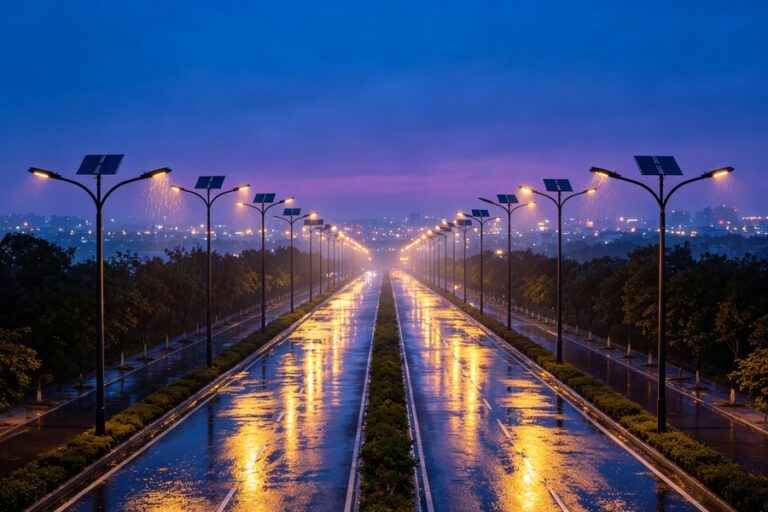
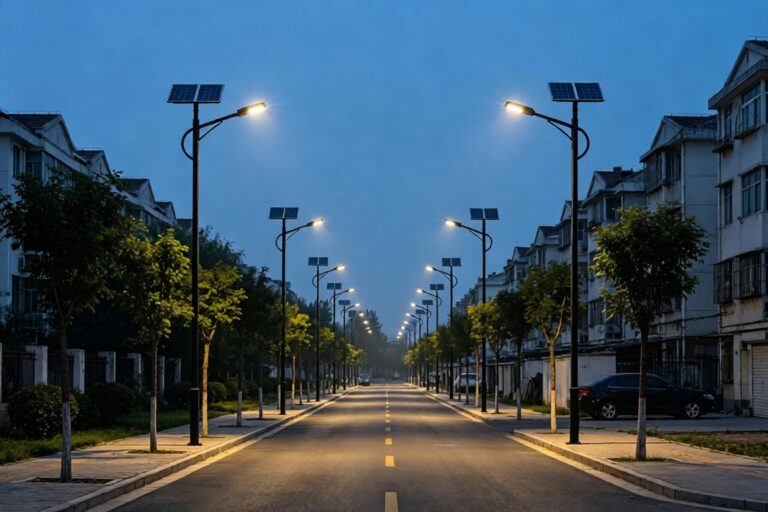
Uneven illumination is one of the most common complaints about solar street lights, and it creates far more problems than just inconsistent brightness across the road. Traditional designs often produce a harsh, bright hotspot directly under the pole, with rapidly fading light that leaves large dark gaps between fixtures. This “zebra stripe” pattern of bright and dark zones forces drivers’ eyes to constantly adjust to changing light levels, creating visual fatigue and increasing the risk of missing obstacles or pedestrians. A uniform light distribution system solves this problem by spreading light evenly across the entire target area, no matter where you stand between two poles.
Real-world challenges of uneven solar lighting
After years of inspecting and retrofitting solar street light installations, I have seen how poor light uniformity undermines the purpose of public outdoor lighting. On rural roads with low traffic volumes, large dark gaps between poles make it impossible for drivers to spot a stopped vehicle or a wandering animal until it is too late to react safely. On residential sidewalks and neighborhood paths, the combination of over-bright hotspots and deep shadows makes people feel less secure after dark, even when the total wattage of the lights seems sufficient. Many installers try to fix this problem by adding more powerful LEDs or placing poles closer together, but this approach wastes solar energy, drains batteries faster, and still fails to eliminate the uneven light pattern. The root issue is not total brightness, but how the available light is distributed across the ground.
Optical design principles for even illumination
A uniform light distribution system uses carefully engineered multi-element optics to break up the concentrated light from individual LED chips and redirect it into a wide, smooth, flat beam. Instead of focusing all the light straight down toward the ground directly under the fixture, the optics split the output into multiple overlapping light zones. One zone covers the area immediately beneath the pole, while other zones extend the light pattern far out toward the midpoint between two adjacent fixtures. The edges of these zones are calibrated to blend together seamlessly, with no sharp drop-offs or overlapping bright spots. This creates a consistent brightness level across the entire road surface, from one pole all the way to the next, without wasting light upward into the sky or onto nearby private property.
Field testing and fine-tuning best practices
From my hands-on experience installing and adjusting these systems, proper on-site calibration is just as important as the optical design itself. Before finalizing pole spacing, run a simple nighttime test with a single fixture mounted at the correct height. Use a basic light meter to take brightness measurements at multiple points across the target area, starting directly under the pole and moving outward in every direction. Adjust the tilt angle of the fixture in small increments until the brightness readings stay as consistent as possible across the entire planned coverage zone. After all fixtures are installed, walk or drive the full length of the route after dark, paying special attention to the midpoint between every pair of poles. If you find any faint dark spots, make tiny individual adjustments to the tilt of the nearby fixtures to fill in the gap. This level of on-site fine-tuning ensures the entire installation delivers the smooth, even illumination that the optical system was designed to provide.
These field-proven steps turn the theoretical benefit of uniform light distribution into real, usable nighttime visibility that improves safety, reduces visual strain, and makes every watt of solar-generated light work for the people using the space.
Recommended articles

Solar street light with wide lighting range
October 14, 2026
Solar street light with anti glare lens
October 14, 2026