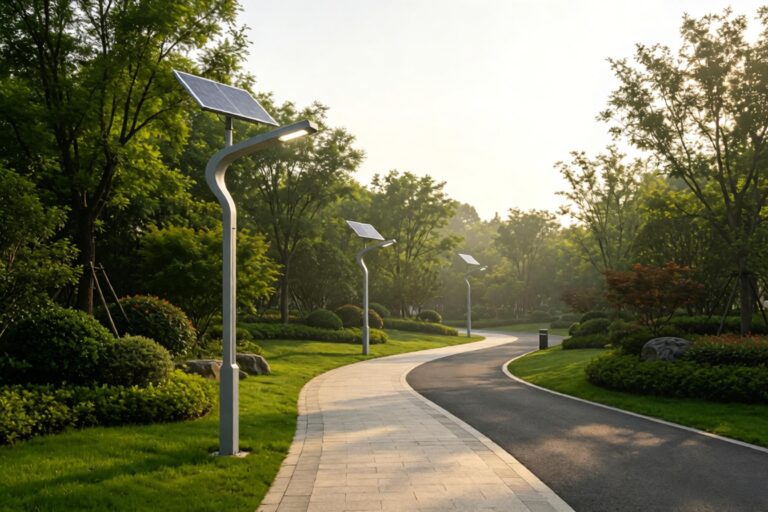
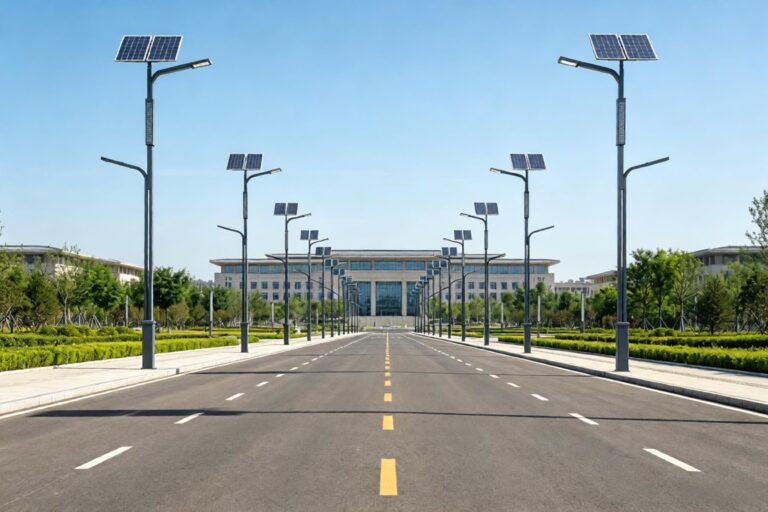
Solar street light for botanical garden
Date: September 2, 2026
Balancing Illumination with Plant Photobiology
The primary consideration for lighting in a botanical garden extends beyond human vision to the photosensitivity of the living collections. Unlike standard street lights, the spectral output must be carefully evaluated. While warm white light (2700K-3000K) is preferred for visitor paths to minimize insect attraction and create a tranquil ambiance, it is crucial to ensure the fixture’s light spill contains minimal far-red and blue wavelengths, which can interfere with plant photoperiodism—the natural cycles governing flowering and dormancy. Fixtures should be fully shielded and precisely aimed to ensure light is cast only onto designated walkways, preventing any significant illumination from reaching sensitive plant beds, greenhouses, or naturalistic areas where it could disrupt growth patterns and seasonal behaviors.
Enhancing Visitor Experience through Context-Sensitive Design
Lighting in a botanical garden serves an aesthetic and educational purpose. The goal is to subtly highlight the garden’s beauty after dusk without creating a theatrical or overly artificial effect. This involves using lower mounting heights and selecting luminaires with a wide, gentle beam distribution to wash paths evenly, avoiding harsh pools of light and deep shadows that feel unsafe. Strategic placement can be used to graze textured bark, softly uplight specimen trees from a distance, or illuminate signage for key plant collections. The design should create a sense of exploration and wonder, guiding visitors naturally through the landscape while ensuring all steps, grade changes, and handrails are clearly visible for safety, without introducing light pollution that detracts from the night sky.
Ensuring System Resilience in a Horticultural Environment
The operational environment of a botanical garden presents unique challenges. Irrigation systems create constant humidity, and fertilizers or pesticides may be present in the air or come into contact with fixtures during maintenance. Therefore, lighting hardware must have a high ingress protection rating (IP65/IP66 minimum) to resist moisture and chemical ingress. The structural components, such as poles and brackets, require a highly corrosion-resistant finish, like hot-dip galvanization followed by a powder coat, to withstand decades of exposure. Furthermore, all installation work—from digging foundations to running conduits—must be carefully coordinated with garden staff to avoid damaging delicate root systems, underground irrigation lines, or rare plant specimens.
Sustainable Operation Aligned with Conservation Values
A botanical garden’s commitment to sustainability makes solar lighting a natural fit, but the system must be meticulously planned. The solar panel must be sized to account for reduced winter sun and potential shading from mature trees. Battery capacity needs to support operation through consecutive cloudy days, especially during long winter nights. Intelligent controls are essential; they can dim lights after closing hours, employ motion sensing in less-frequented sections, and adjust operating times seasonally. The entire system’s lifecycle is considered, prioritizing high-quality, long-life components (e.g., lithium iron phosphate batteries) to minimize maintenance disruptions and replacement waste, thereby upholding the garden’s environmental stewardship principles in practice.
Recommended articles

Solar street light for parking lot
August 14, 2026
Solar street light for rural road
August 13, 2026