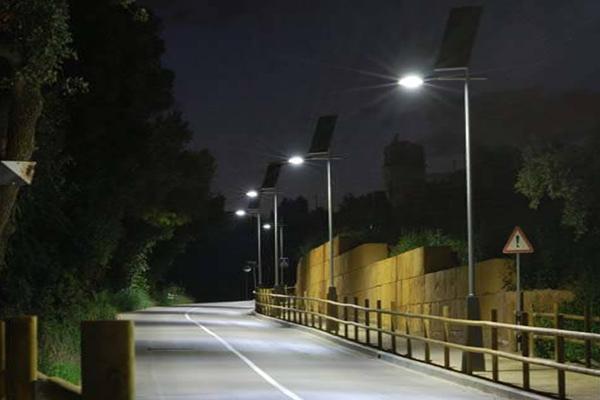
Solar street light with high transmittance lens
Date: October 13, 2026
Solar street lights rely on efficient light distribution to convert limited stored solar power into usable, even illumination across road and public spaces, and the performance of the lens directly defines how effectively that light is delivered to the target area. High transmittance lens designs minimize the amount of light lost to internal reflection, scattering, and unnecessary absorption inside the optical structure, turning more of the LED’s total output into useful illumination on the ground. This optical optimization delivers real, measurable improvements to lighting coverage, energy efficiency, and overall system performance that standard basic lens designs cannot match.
Optical Material and Transmittance Performance Fundamentals
High transmittance lenses for solar street lights are manufactured from carefully selected optical-grade base materials formulated to minimize internal light absorption across the full visible spectrum. These materials are processed under tightly controlled conditions to eliminate micro-bubbles, material impurities, and internal structural defects that would otherwise scatter or trap light as it passes through the lens body. The resulting raw substrate allows far more light to travel through the structure without being lost as waste heat, ensuring that nearly all the light generated by the LED source exits the lens to illuminate the surrounding area.
Precision engineered anti-reflection surface coatings are applied to both the inner and outer faces of the finished lens, to further reduce the amount of light that bounces back toward the LED source at the material-air boundary. These coatings are tuned to match the specific wavelength range of the LED’s white light output, drastically cutting down on surface reflection losses that typically waste a noticeable fraction of total light output on standard uncoated lenses. The combined effect of high-purity base material and optimized anti-reflection coatings pushes total system transmittance to a level that maximizes every lumen generated by the limited solar power budget of the off-grid system.
Light Distribution Optimization for Road Lighting Requirements
Beyond raw transmittance improvements, high performance lenses for solar street lights are designed with precision curved surface geometry shaped by non-imaging optical modeling. The surface contours are carefully calculated to redirect the raw wide-angle light output from the LED array into a controlled, rectangular illumination pattern that aligns perfectly with the shape of standard roadways and pedestrian paths. This eliminates the wasted light that spills uselessly onto rooftops, tree canopies, or empty areas far away from the target lighting zone, directing nearly every available lumen directly onto the ground where it is needed.
The optimized light distribution also delivers far more even illumination across the full coverage area, eliminating the harsh, over-bright hot spot directly under the light pole and the dark, poorly lit gaps between adjacent street lights that are common with basic lens designs. The gradual, controlled falloff of light intensity at the edges of the beam pattern ensures there are no abrupt dark patches on the road surface, creating uniform visibility for drivers and pedestrians that meets official public lighting safety standards. This even distribution means fewer total lumens are required to achieve the same minimum ground illumination level, reducing the total power draw of the luminaire and extending the nightly runtime of the solar street light on its stored battery capacity.
Long-Term Outdoor Durability and Sustained Optical Performance
High transmittance street light lenses are engineered to maintain their excellent optical performance over decades of continuous outdoor exposure, without suffering the rapid yellowing, surface fogging, or transmittance loss that plagues lower quality optical components. The base material and surface coatings are formulated with strong UV resistance, so they do not degrade or discolor even after years of unprotected exposure to direct sunlight. This prevents the gradual drop in light output that many older solar street light installations experience, where the lens slowly yellows and cuts total effective illumination by 30 percent or more after just a few years in the field.
The outer surface of the lens is also designed with enhanced scratch resistance and anti-fouling properties that resist buildup of road dust, insect residue, and environmental grime. Even after months of operation without regular cleaning, the lens surface remains clear enough to maintain its designed high transmittance, rather than developing a thin opaque layer that blocks light output. This long-term stable optical performance ensures the solar street light maintains its full designed illumination level year after year, reducing the need for frequent maintenance visits to clean or replace degraded lenses, and extending the effective service life of the entire lighting system.
Recommended articles

Solar street light with insulated wiring
October 13, 2026

Solar street light with anti aging cable
October 13, 2026