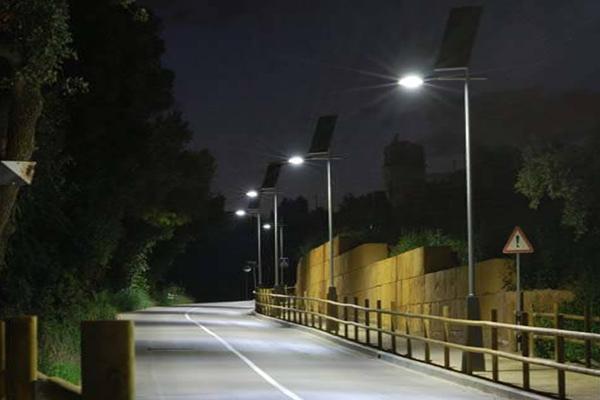
Solar street light with insulated wiring
Date: October 13, 2026
Solar street light systems are installed in fully exposed outdoor environments where rain, snow, ground moisture, and physical impact constantly threaten the integrity of electrical connections. Insulated wiring built specifically for these systems creates a critical protective barrier that isolates current-carrying conductors from external environmental hazards, preventing avoidable electrical faults that cause unexpected lighting failures, safety risks, and premature system degradation. Properly implemented insulated wiring forms a foundational layer of reliability that extends the overall service life of the entire outdoor lighting installation.
Core Insulation Material and Environmental Protection Properties
The insulation layer for solar street light wiring is formulated to meet the unique stress conditions of long-term outdoor operation, rather than relying on generic indoor wiring materials that degrade quickly under UV exposure and temperature cycling. High-quality insulation formulations include UV-stabilized additives that block the damaging effects of continuous direct sunlight, preventing the material from turning brittle, cracking, or losing dielectric strength after years of unshaded operation. These materials also resist hydrolysis and microbial degradation, so the insulation structure does not break down when buried in damp soil, or when exposed to repeated cycles of heavy rain and high humidity in tropical and subtropical regions.
The insulation material maintains consistent physical properties across a very wide temperature operating range, remaining flexible and crack-resistant even in deep sub-zero winter conditions, and not softening or deforming when the cable is exposed to peak summer heat. This temperature stability prevents the insulation from developing micro-fissures or structural gaps that would allow moisture to seep through and reach the internal copper conductors. Every batch of finished insulated wiring undergoes full dielectric strength testing before leaving the production line, to confirm the insulation layer can reliably withstand the maximum system operating voltage plus a large safety margin, eliminating the risk of accidental electrical breakdown under normal operating conditions.
Conductor Protection and System Fault Prevention Benefits
Fully enclosed insulated wiring creates a complete physical barrier that separates the positive and negative conductors of the solar street light system from each other, and from the metal pole, ground surface, and nearby external objects. This isolation eliminates the risk of short circuits that would be triggered if bare conductors came into accidental contact, even when the cable is routed through tight spaces inside the light pole, or laid directly in shallow ground trenches. It also prevents stray current leakage that would slowly drain the system battery during long periods of cloudy weather, ensuring the stored solar power is fully directed to powering the LED luminaire instead of being wasted to unintended ground paths.
The robust insulation layer also shields the internal conductors from galvanic corrosion caused by contact with moisture, road salt, and soil chemicals. Even when the outer cable jacket suffers minor superficial abrasion during installation or routine maintenance, the intact underlying insulation layer continues to deliver full electrical protection, preventing small physical damages from escalating into full system failures. This layered protection drastically reduces the number of intermittent, hard-to-diagnose faults that plague poorly wired solar street light installations, where hidden partial short circuits cause random dimming or unexpected overnight battery drain.
Installation Compliance and Long-Term Operational Safety
Insulated wiring for solar street lights simplifies proper installation practices and helps teams meet all relevant local electrical safety codes for outdoor public lighting systems. The clearly defined, color-coded insulation layers make it easy for installation technicians to distinguish between positive, negative, and grounding conductors at every connection point, drastically reducing the risk of accidental polarity reversal during wiring assembly. This clear visual identification also makes later inspection work far more efficient, as maintenance teams can quickly trace and confirm every circuit path without needing to expose bare conductors for visual verification.
Over decades of long-term operation, intact insulated wiring maintains a consistent safety profile for the entire public lighting network. It eliminates the risk of exposed live conductors that could create electrical shock hazards for pedestrians, maintenance workers, or local wildlife, even after many years of exposure to harsh outdoor conditions. Properly installed insulated wiring also reduces the risk of electrical arcing at damaged connection points, removing a hidden fire hazard that could develop in aging solar street light systems with poorly protected cabling. This combination of reliability and safety makes insulated wiring a non-negotiable foundational component for any solar street light installation designed for long-term, low-maintenance public operation.
Recommended articles

Solar street light with high transmittance lens
October 13, 2026

Solar street light with anti aging cable
October 13, 2026