Solar street light for industrial park
Date: August 16, 2026
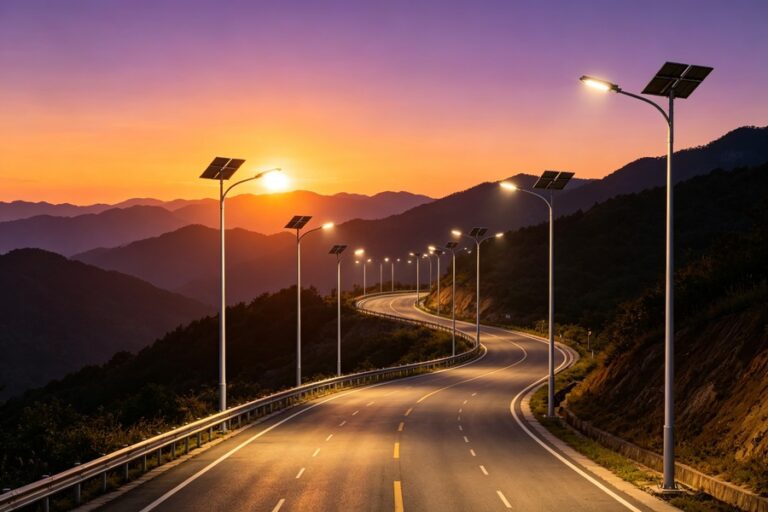
Industrial parks operate around the clock, with shift changes, heavy vehicle movements, and perimeter security needs that demand consistent, reliable outdoor lighting across every corner of the site. Unlike standard urban roadways, these areas often stretch across large open plots, include remote storage yards, loading zones, and access lanes that sit far away from existing public power grids. Many park managers face persistent pain points when relying on traditional grid-tied lighting: costly underground cable laying, frequent power outages that leave dark gaps in high-traffic areas, and rising monthly electricity bills that eat into annual operational budgets. Solar street light systems built specifically for industrial use solve these exact challenges by generating power right where illumination is needed, eliminating the need for long cable runs and reducing dependency on unstable local grid infrastructure.
Lighting Performance Matched to Industrial Zone Needs
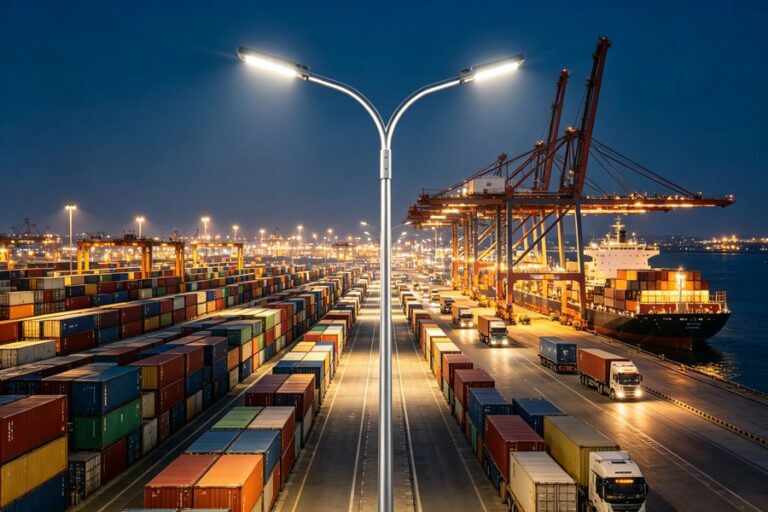
Every section of an industrial park has unique lighting requirements that generic one-size-fits-all lighting systems fail to address. Truck staging areas need uniform, glare-free illumination that lets drivers spot loading markers and pedestrian staff clearly even during late-night shifts, while perimeter fence lines require consistent low-level light that supports security camera visibility without creating unnecessary light pollution that disturbs nearby facilities. Modern solar street light setups use adjustable brightness profiles that align with actual site activity patterns: full power during peak shift change hours, dimmed to 60% output in the quiet late-night hours when vehicle traffic drops, and triggered back to full brightness if motion sensors detect movement near restricted storage zones. The LED light engines are calibrated to deliver the correct color temperature that reduces eye strain for workers moving between indoor factory floors and outdoor areas, with minimal light decay that keeps performance steady for years without frequent fixture replacements.
Durability for Harsh Outdoor Industrial Conditions
Industrial park environments expose outdoor lighting to far more stress than standard residential or public street locations. Heavy dust from delivery vehicles, frequent temperature swings, occasional chemical fumes from nearby processing facilities, and strong winds from open unobstructed plots all test the limits of lighting hardware. Well-designed solar street light systems for these sites use fully sealed, corrosion-resistant outer casings that block dust and moisture from reaching internal components, with reinforced mounting brackets that keep fixtures stable even during extreme weather events. The solar panels are mounted at optimized angles to shed rain, dust, and light snow automatically, reducing the need for frequent manual cleaning even in areas with low annual rainfall. All internal wiring connections are reinforced with waterproof seals, and the entire system is built to withstand years of exposure without rust, loose connections, or unexpected performance drops that leave sections of the park in darkness.
Low-Lift Long-Term Site Management
Park facility teams already manage a long list of daily operational tasks, so lighting systems that add unnecessary maintenance work create extra strain on limited staff resources. Properly deployed solar street light systems remove most of the routine work tied to traditional grid lighting. Remote monitoring functionality lets management teams check the operational status of every single light across the entire park from a single central dashboard, receiving automated alerts if a fixture experiences low battery levels or unexpected performance drops long before a worker would notice a dark spot during a routine patrol. Scheduled quarterly check-ins only require staff to do a quick visual inspection of light pole alignment, wipe light dust off solar panels with a soft cloth, and confirm that brightness schedules still match the latest shift patterns for on-site tenants. There is no ongoing monthly utility bill processing for lighting power, no need to coordinate with local power providers for grid outage repairs, and no complex underground electrical system to troubleshoot if a single fixture stops working.
These systems integrate seamlessly into existing industrial park infrastructure without disruptive construction work that blocks access for delivery trucks or interrupts on-site operations. Installation teams can mount fixtures on existing sturdy poles or set new poles in place in a fraction of the time it takes to lay underground power cables, letting park managers roll out full lighting coverage to new expansion zones or remote storage areas in a very short timeline. The independent power structure of each individual light also means that a single issue with one fixture will never take out an entire stretch of lighting across a large section of the park, creating a far more reliable safety net for staff, visitors, and valuable on-site assets that operate at all hours of the day and night.
Recommended articles

Solar street light with high transmittance lens
October 13, 2026
Solar street light with insulated wiring
October 13, 2026