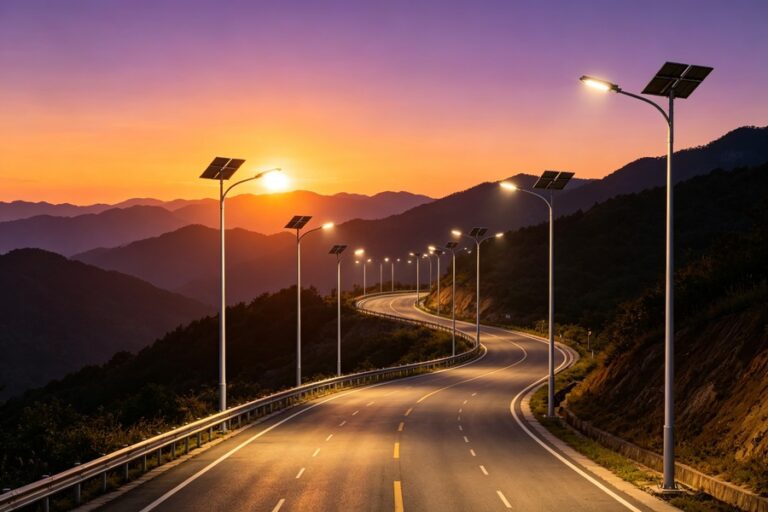
Solar street light for township construction
Date: August 17, 2026
Solar street lights are a transformative solution for township infrastructure, offering a path to improved public safety, community activity, and economic vitality without the burden of extensive grid trenching and ongoing electricity costs. Success in township construction hinges on moving beyond basic functionality to consider long-term sustainability, ease of maintenance, and the specific social context of the community. The goal is to implement a system that is reliable for residents and manageable for local authorities over a decade or more.
Balancing Initial Investment with Total Cost of Ownership
For township budgets, the upfront cost is a major consideration, but the true value is measured over the system’s entire lifespan. A comprehensive cost analysis should include not just the purchase price of the lights, but also installation expenses, a realistic projection of maintenance needs over 10+ years, and any potential savings from reduced grid infrastructure work. Systems with modular designs allow for easier repair (e.g., replacing a single solar panel or LED module) rather than swapping the entire fixture, significantly lowering long-term upkeep costs. Choosing components known for durability, such as LiFePO4 batteries and corrosion-resistant poles, reduces failure rates and the frequency of technician visits, which is crucial in areas where specialized labor may not be readily available.
Designing for Local Environmental and Usage Patterns
A one-size-fits-all approach often leads to underperformance. The system design must be informed by local data. This includes analyzing historical solar irradiance maps for the region to size the panel correctly, understanding seasonal weather patterns (e.g., monsoon rains, dust storms), and averaging winter sunlight hours to ensure year-round operation. Furthermore, the lighting profile should match community use. Lights for a central market square may need higher brightness and longer operation hours, while those on residential side streets can utilize motion sensors or dimming schedules after midnight to conserve energy. The physical design should also consider local conditions: poles must be robust enough to withstand prevalent winds, and fixtures should have an appropriate IP rating for dust and rain.
Prioritizing Ease of Installation and Community-Centric Maintenance
The installation process should minimize disruption and technical complexity. Systems featuring pre-assembled components, plug-and-play wiring, and clear installation manuals empower local contractors or municipal crews to complete the work efficiently. Planning for centralized management is key. A cluster of lights can be connected to a remote monitoring system that provides real-time data on performance and faults via SMS or a simple web portal, allowing a single municipal worker to monitor dozens of lights instead of physically inspecting each one. For basic upkeep, designing fixtures with tool-less access to key components like the battery and controller simplifies routine checks and fosters a sense of local ownership and capability.
Ensuring Safety, Compliance, and Adaptive Illumination
The lighting must meet fundamental safety and performance standards. This includes providing adequate, uniform illumination (measured in lux) on roadways and pedestrian paths to deter crime and prevent accidents, with a focus on minimizing dark spots and glare. Fixtures should comply with relevant international standards for electrical safety, ingress protection (e.g., IP65), and wind load resistance. Implementing smart controls adds a layer of efficiency and adaptability. Time-based dimming, motion-activated brightening, and the ability to remotely adjust schedules allow the township to tailor lighting to actual needs, celebrate holidays with special lighting patterns, and respond to community feedback without costly hardware changes.
Recommended articles

Solar street light with high transmittance lens
October 13, 2026
Solar street light with insulated wiring
October 13, 2026