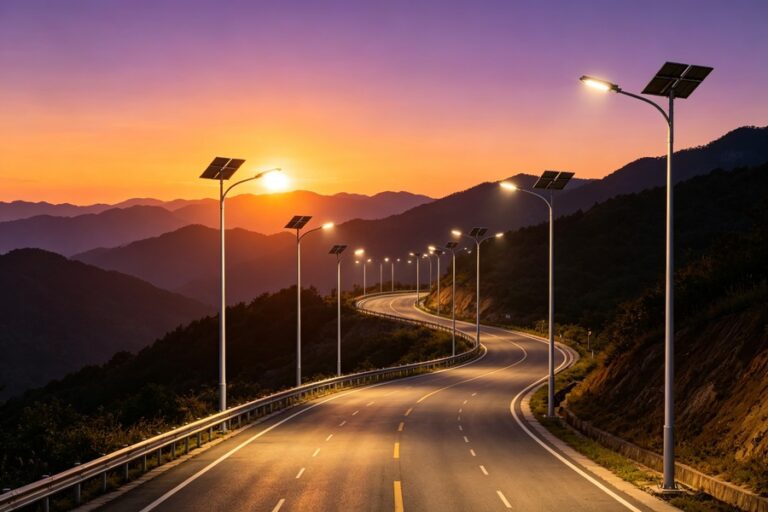
Solar street light for campus road
Date: August 18, 2026
Implementing Solar Street Lighting for Safer and Sustainable Campus Pathways
Transitioning to solar-powered street lighting for campus roadways represents a strategic investment that aligns with institutional sustainability goals while directly addressing the core need for safe, reliable pedestrian and vehicular circulation after dark. This approach moves beyond simply replacing existing fixtures, offering a self-contained energy solution that eliminates grid dependency for lighting, reduces long-term operational costs, and serves as a visible testament to the campus’s commitment to renewable energy and environmental stewardship.
Site Assessment and Lighting Design for Campus-Specific Needs
A successful campus solar street light project begins with a detailed site analysis. This involves mapping the specific road and pathway classifications—from high-traffic vehicle thoroughfares requiring broad, uniform illumination to intimate pedestrian walkways where softer, targeted lighting enhances the nighttime ambiance. Key factors include measuring solar access at proposed pole locations to ensure photovoltaic panels receive uninterrupted sunlight throughout the day, accounting for potential shading from buildings or mature trees. The lighting design must then specify the appropriate luminaire optics, pole height, and spacing to achieve the required illumination levels (measured in lux or foot-candles) for each zone, ensuring compliance with safety standards without creating light pollution that disrupts the nocturnal environment or adjacent residential areas.
Component Selection for Durability and Long-Term Performance
The reliability of a campus solar street light system hinges on the synergy and quality of its core components. The solar photovoltaic panel must have sufficient wattage and conversion efficiency to fully recharge the battery during variable weather conditions, with a durable, anti-reflective coating to resist dust accumulation. The battery storage system, typically using deep-cycle Lithium Iron Phosphate (LiFePO4) technology for its long lifespan and thermal stability, must be correctly sized to power the lights for consecutive autonomous nights, often with a reserve for cloudy days. The LED luminaire should offer high luminous efficacy (lumens per watt), a suitable correlated color temperature (CCT) for clear visibility, and robust ingress protection (e.g., IP65 or higher) against dust and moisture. An integrated smart controller is essential for managing charge/discharge cycles, enabling programmable dimming schedules to conserve energy during low-traffic hours, and providing remote performance monitoring.
Installation, Grid Integration, and Smart Management Considerations
While fundamentally off-grid, campus installations often benefit from a hybrid or networked approach. Foundation and pole installation must account for local soil conditions and wind loads, often using direct burial or concrete foundations for permanence. For critical pathways where light is non-negotiable, a grid-assisted or hybrid configuration can be deployed, where the lights primarily operate on solar power but have a grid connection as a backup during prolonged poor weather. Furthermore, integrating lights into a centralized campus management network allows facilities teams to monitor each light’s performance, battery status, and solar yield in real-time, schedule lighting scenes for special events, and receive immediate alerts for maintenance needs, transforming a static asset into a node in a smart campus infrastructure.
Lifecycle Maintenance and Stakeholder Engagement Strategy
Proactive maintenance ensures the system delivers on its promised lifespan and performance. A scheduled protocol should include regular cleaning of solar panel surfaces to maintain optimal energy harvest, periodic inspection of battery health and electrical connections, and verification of lighting output and pole integrity. Engaging the campus community is equally vital. Educational signage at key installations can explain the technology, display real-time energy savings and carbon offset metrics, and reinforce the institution’s sustainability mission. Involving students in data collection or monitoring projects related to the lighting system fosters a sense of ownership and transforms the infrastructure into a living laboratory for renewable energy education.
Recommended articles

Solar street light with high transmittance lens
October 13, 2026
Solar street light with insulated wiring
October 13, 2026