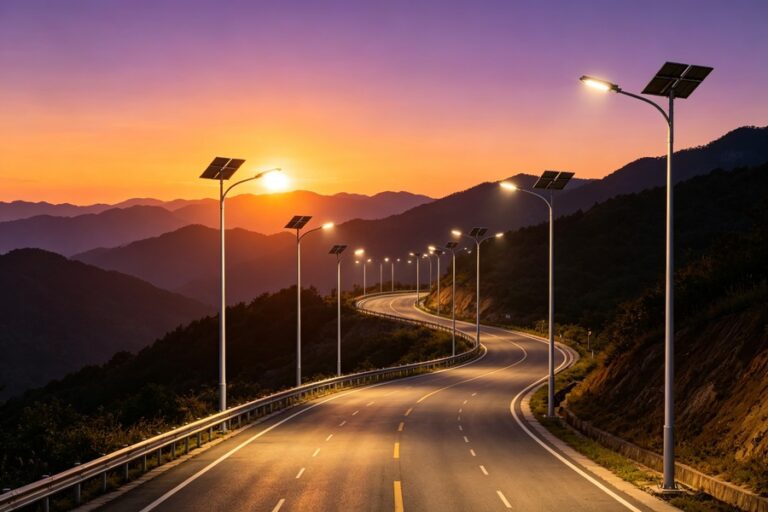
Solar street light for public square
Date: August 19, 2026
Deploying solar street lights in a public square presents a unique set of opportunities and challenges compared to linear road installations. The primary goal shifts from guiding vehicular traffic to enhancing safety, enabling nighttime activity, and contributing to the aesthetic and social value of a communal space. A successful implementation requires a holistic design approach that balances illumination performance, architectural integration, and long-term reliability in a dynamic, open environment.
Illumination Design for Safety and Ambiance
Lighting a square effectively requires a focus on uniform, glare-free illumination that fosters a sense of security and comfort. Unlike roads, squares have irregular shapes and multiple usage zones—pathways, seating areas, green spaces, and central plazas. A combination of different luminaire types is often necessary. Higher-mounted, wider-beam lights can provide general ambient lighting, while lower bollard-style solar lights are ideal for defining pathways and seating areas without causing light pollution. The Color Rendering Index of the LEDs should be high to accurately render colors, which is important for social interaction and appreciating the square’s features. Lighting levels must comply with local standards for pedestrian areas, ensuring sufficient brightness for safety while avoiding overly harsh or sterile lighting that detracts from the evening ambiance.
System Sizing and Autonomy for Reliable Operation
The energy system must be robust enough to handle the specific demands of a public square. Usage patterns can be less predictable than street lighting, with events potentially extending hours of activity. The solar photovoltaic panel must be sized to account for potential shading from surrounding buildings or trees, which is more common in urban squares than on open roads. Battery capacity needs to support the required illumination hours across consecutive cloudy days, a critical factor for maintaining public trust in the system. Given the public nature of the location, the battery’s lifespan and performance in varying temperatures are crucial; lithium iron phosphate batteries are often preferred for their longer cycle life and stability. A smart controller with adaptable operating modes is essential, allowing for dimming during low-activity periods and full brightness during events, thereby optimizing energy use and extending system autonomy.
Architectural Integration and Vandal-Resistant Design
The visual impact of the lighting fixtures is a major consideration. Fixtures should complement the square’s architectural style, whether modern, traditional, or minimalist. Choices include sleek, integrated designs where the solar panel and light form a single cohesive unit, or more traditional forms where panels are discreetly mounted. Durability is paramount. Fixtures and mounting hardware must be constructed from robust, corrosion-resistant materials like heavy-gauge aluminum with powder-coated finishes. Vandal-resistant features, such as tamper-proof fasteners, impact-resistant polycarbonate lenses, and securely housed internal components, are necessary to prevent theft or damage. The mounting poles need to be engineered to withstand high wind loads common in open plazas. Ease of maintenance is also critical; modular designs that allow for easy access to the battery and electronics simplify servicing and reduce downtime.
Recommended articles

Solar street light with high transmittance lens
October 13, 2026
Solar street light with insulated wiring
October 13, 2026