Solar street light for remote settlement
Date: August 22, 2026
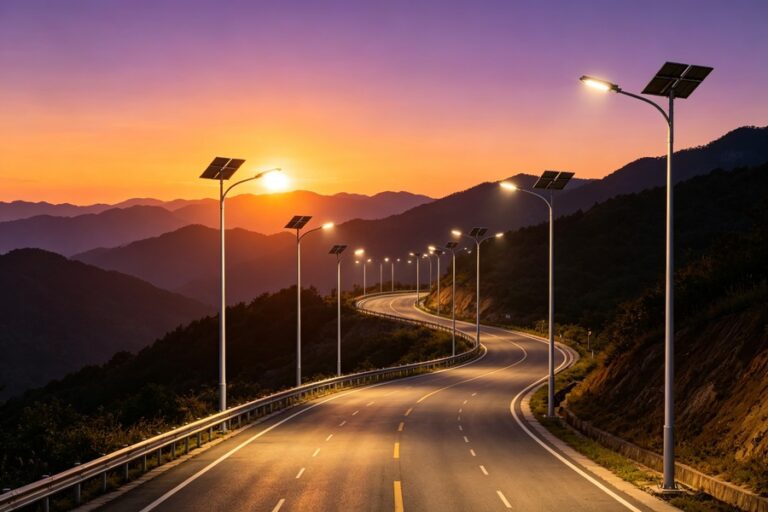
Many remote settlements sit far beyond the reach of conventional power grids, where consistent nighttime lighting has long been a persistent challenge for daily life and community safety. Residents in these areas often face limited visibility after dark, which restricts movement, slows down local economic activities, and creates unnecessary risks for children walking to evening gatherings or elders moving between homes. Unlike grid-tied lighting systems that require extensive cabling, frequent utility maintenance, and ongoing monthly fees, lighting solutions built around independent solar power generation can operate reliably in locations where infrastructure support is scarce. These systems draw energy directly from local sunlight, store it for use after sunset, and deliver steady illumination without relying on distant power stations or complex transmission networks.
Site assessment and placement best practices
Before any installation work begins, a thorough on-site survey helps identify the most suitable locations for each lighting unit. Teams first map out the daily path of the sun across the settlement, noting large trees, overhanging roof edges, or natural terrain features that could cast prolonged shadows over potential mounting positions. The goal is to ensure every light-capturing surface receives unobstructed sunlight from early morning through late afternoon, even during shorter winter days when solar radiation levels naturally drop. Workers also evaluate local wind patterns, soil stability, and common movement routes across the settlement, so each pole can be positioned to avoid blocking pedestrian paths while covering the highest-priority areas such as main gathering squares, access trails leading to water sources, and paths connecting individual households. Proper spacing between units is calibrated based on the width of the path and the typical volume of nighttime foot traffic, ensuring even light distribution without unnecessary gaps or overlapping over-illumination.
Routine field maintenance routines for long-term reliability
Regular, low-effort maintenance checks keep systems performing consistently through years of exposure to dust, seasonal storms, and extreme temperature swings. Local community members can be trained to perform simple monthly inspections, wiping away accumulated dust, fine sand, or bird droppings from light-capturing surfaces that would otherwise block sunlight and reduce charging efficiency. These routine visits also include checking for loose mounting hardware, clearing any debris that has piled up around the base of each pole, and confirming that the light sensor remains clean and unobstructed so it can accurately detect changes in ambient light at dawn and dusk. Every few months, a trained technician can travel to the settlement to perform deeper system checks, verifying internal energy storage performance, inspecting wiring connections for signs of corrosion from high humidity or salt air, and adjusting illumination settings to match seasonal changes in local daylight hours. Establishing a shared local maintenance schedule ensures no unit is left unattended for too long, and small issues are addressed before they develop into larger, harder-to-fix problems.
Adaptive performance adjustments for harsh seasonal conditions
Remote settlements often face dramatic seasonal shifts that place extra stress on outdoor lighting systems, from heavy monsoon rains and thick layers of winter frost to extended periods of cloudy weather that reduce daily solar charging. Simple, practical adjustments can help systems adapt to these conditions without requiring complex technical overhauls. During rainy or foggy seasons, teams can temporarily adjust the light activation timing to prioritize lower, longer-lasting illumination levels that preserve stored energy for the full night, rather than running at maximum brightness for only a few hours. In areas that see heavy snowfall, regular gentle clearing of snow from light-capturing surfaces prevents thick ice layers from blocking sunlight, while small structural adjustments to mounting angles help shed snow and rain naturally rather than letting moisture pool on critical surfaces. These adaptive tweaks are tailored to the specific local climate patterns of each settlement, ensuring the lighting system remains functional even through the harshest parts of the year, without creating extra burdens for the people who rely on it most.
Recommended articles

Solar street light with high transmittance lens
October 13, 2026
Solar street light with insulated wiring
October 13, 2026