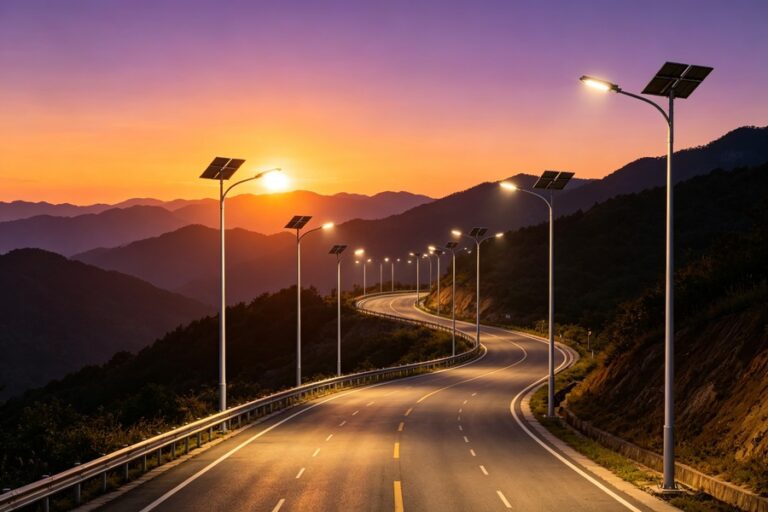
Solar street light for village renovation
Date: August 16, 2026
Village renovation projects focus on lifting public safety, improving daily quality of life for residents, and building long-lasting infrastructure that fits the unique rhythm of rural community life. Many older villages have long struggled with limited outdoor lighting: narrow alleyways stay pitch black after sunset, main access roads become dangerous for pedestrians and two-wheelers at night, and public gathering spots near temples, village squares, or farm field entrances lack the light that lets families stay active and connected after work hours. Traditional grid-tied lighting often falls short in these settings, as many remote village locations lack easy access to stable power lines, and local village committees cannot afford the high recurring electricity costs that come with running dozens of street lights every night. Solar street light solutions tailored for village renovation work around these exact barriers, using locally generated solar power to deliver consistent illumination without relying on stretched rural power grids or creating unmanageable long-term operational burdens for the community.
Lighting Design That Fits Daily Rural Life
Village communities have very specific lighting needs that generic urban street lighting systems were never built to meet. The narrow, winding alleyways between traditional homes need soft, even light that eliminates deep dark corners without shining directly into bedroom windows and disrupting resident sleep. Main village roads that see regular traffic from farm tractors, delivery vehicles, and school children walking home after evening classes need brighter, uniform coverage that lets people spot potholes, stray animals, and small obstacles clearly from a distance. Public spaces like village squares, outdoor market spots, and the grounds near local clinics benefit from adjustable lighting levels that stay bright for evening community events, then dim down to a gentle glow once most residents have gone home for the night. These systems can also be set to activate automatically as the sun sets, so elderly residents do not need to walk to a central control point to turn lights on, and no one has to worry about forgetting to switch systems off at dawn.
Resilience for Remote Rural Environments
Village locations often expose outdoor infrastructure to conditions that most urban lighting systems never encounter. Open unshaded farmland areas bring strong seasonal winds, heavy monsoon rains, and occasional dust storms that can wear down poorly built hardware very quickly. Many villages also sit in areas with limited access to repair teams, so lighting systems need to keep working reliably for long stretches without needing frequent on-site fixes. Solar street light setups built for rural renovation use fully sealed, weather-resistant casings that keep dust, rain, and high humidity away from sensitive internal parts. The mounting structures are reinforced to stand up to strong gusts, and the panels are angled to shed rain, fallen leaves, and light layers of dust naturally during seasonal storms. Even during stretches of overcast, rainy weather common in many rural regions, the systems are calibrated to store enough power to keep lights running for multiple consecutive nights without interruption.
Community-Led Low-Effort Upkeep
Village renovation projects work best when the new infrastructure is easy for local residents to manage, instead of relying on outside technicians who may live hours away. Solar street light systems built for these communities are designed with simple, intuitive functions that local village maintenance volunteers can learn to handle in just one short training session. Basic routine care only involves wiping light dust and fallen leaves off the surface of solar panels once every few weeks, and doing a quick visual check to make sure no branches or debris are blocking the panels from getting full sunlight. Many setups also include basic remote status tracking that local management teams can access from a simple mobile device, so they can spot any unusual performance issues early, long before a light stops working completely. There are no complicated underground power lines to repair, no monthly electricity bills to process and pay, and no need to coordinate with distant power utility teams to fix outages that leave whole sections of the village dark.
These lighting systems integrate smoothly into existing village layouts without disruptive construction work that would block alley access or disturb daily farming routines. Installation teams can set up new fixtures in a matter of hours, no long digging projects to lay underground cables required, so the community can start using the new lights almost immediately. The independent, self-powered design also means that even if the local village grid experiences temporary outages, the street lights will keep running as normal, keeping walkways, access roads, and public spaces safe and lit for every resident, from young children walking home from after-school activities to elderly residents taking slow evening walks around the village square.
Recommended articles

Solar street light with high transmittance lens
October 13, 2026
Solar street light with insulated wiring
October 13, 2026